
Identity Theft Risks in Online Gambling

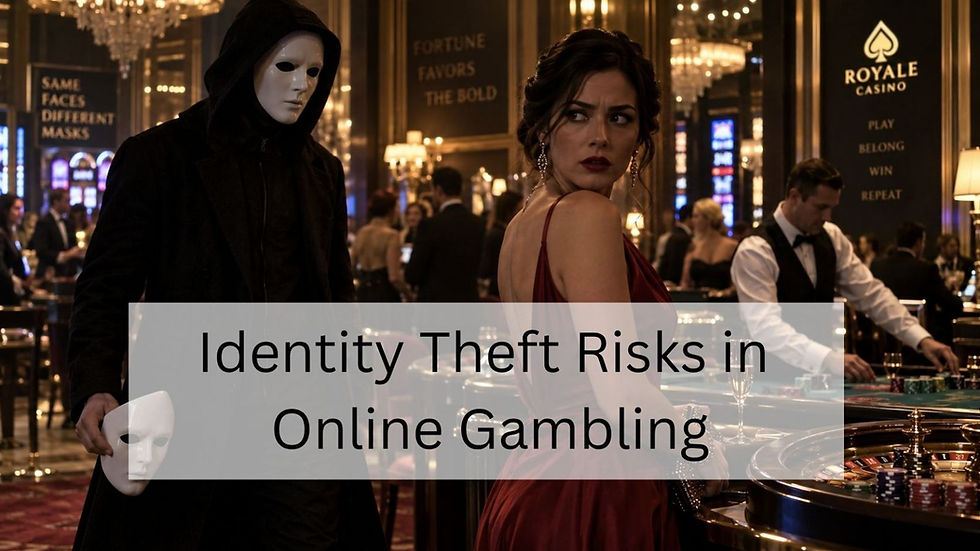
Online gambling accounts can contain much more than a username and password. Depending on the platform, a player may provide their full name, phone number, payment information, address, and even identity documents during account verification.
That makes gambling accounts potentially attractive targets for identity thieves.
Someone searching for a Winbox App Download should therefore treat account security seriously. A convincing fake casino page or fraudulent verification request can potentially expose information that is useful far beyond the gambling account itself.
Understanding where the risks come from is the first step towards avoiding them.
What Is Identity Theft in Online Gambling?
Identity theft happens when someone obtains personal information and uses it without permission.
In an online gambling context, stolen information could potentially be used to:
Take Over A Casino Account.
Attempt Unauthorised Withdrawals.
Impersonate The Player.
Open Fraudulent Accounts.
Target Other Online Accounts.
Conduct Payment Fraud.
Launch Further Phishing Attacks.
Identity theft can happen through a casino platform itself, but criminals may also create fake websites, apps, emails, or support accounts that imitate legitimate services.
What Information Can Gambling Accounts Contain?
Depending on the platform and verification requirements, an account might contain:
Full Name.
Date Of Birth.
Phone Number.
Email Address.
Residential Address.
Payment Information.
Deposit And Withdrawal History.
Identity Documents.
Device And Login Information.
Identity verification, often called KYC or Know Your Customer, can involve particularly sensitive documents.
This is why players should verify where documents are being uploaded before submitting anything.
Common Identity Theft Risks at a Glance
Risk | What Can Happen | Warning Sign |
Phishing Website | Login credentials are stolen | Slightly misspelled domain |
Fake Casino App | Device or account data is captured | Unofficial download source |
Fake KYC Request | Identity documents are stolen | Documents requested through private chat |
Account Takeover | Criminal gains control of account | Unknown login notification |
Fake Support Agent | OTP or personal data is stolen | Agent requests password or OTP |
Payment Scam | Banking information is exposed | Unusual payment instructions |
Password Reuse | Other accounts become vulnerable | Same password used across services |
Several of these attacks rely more on tricking the user than technically hacking the casino.
How Do Fake Casino Websites Steal Identities?
Phishing sites imitate genuine casino platforms.
They may copy:
Logos.
Colours.
Login Screens.
Promotions.
Customer Support Pages.
Game Lobbies.
The player enters their username and password, believing they are logging into the genuine platform.
Those details are instead sent to the attacker.
More sophisticated phishing pages may also request:
OTP Codes.
Card Information.
Identification Documents.
Banking Details.
Always check the domain before entering sensitive information.
Why Are Fake Casino Apps Dangerous?
Fake apps can potentially collect far more information than a normal phishing page.
A malicious app might request access to:
Messages.
Contacts.
Photos.
Files.
Notifications.
Accessibility Services.
Some permissions can potentially expose verification messages or other sensitive information.
Anyone searching for a Winbox App Download should therefore verify the source rather than installing the first file advertised through search results, social media, or private messages.
Be particularly cautious of apps described as:
Hacked Versions.
Unlimited Credit Apps.
Guaranteed Winning Apps.
Modified Casino APKs.
VIP Unlock Tools.
Claims that software can guarantee casino winnings are a major warning sign.
How Do Fake KYC Scams Work?
Casino verification can create an opportunity for impersonation scams because legitimate operators may genuinely request identity documents.
A scammer might claim:
“Your account requires urgent verification. Send your ID here.”
They may request:
Identity Card.
Passport.
Driving Licence.
Bank Statement.
Selfie Holding An ID.
Proof Of Address.
The problem is not necessarily the type of document requested. The problem is where and why it is being requested.
Sensitive documents should only be submitted through the verified process specified by the legitimate platform.
Avoid sending identity documents to random messaging accounts claiming to be support agents.
What Is Casino Account Takeover?
Account takeover happens when someone obtains enough information to access another person's gambling account.
Common causes include:
Stolen Passwords.
Password Reuse.
Phishing.
Compromised Email Accounts.
Malware.
Social Engineering.
Once inside, the attacker may attempt to change:
Password.
Email Address.
Phone Number.
Withdrawal Details.
Security Settings.
They may also use information found inside the account to target the victim elsewhere.
Why Is Password Reuse Dangerous?
Suppose someone uses the same password for:
Casino Account.
Email.
Shopping Website.
Social Media.
If one of those services suffers a data breach, criminals may test the leaked password against the others.
This is called credential stuffing.
A unique password for each important account limits the damage if one credential is exposed.
Password managers can make unique passwords much easier to maintain.
Why Should Your Email Account Be Protected?
The email linked to your gambling account can be just as important as the casino password.
Someone controlling your email may be able to:
Request Password Resets.
Read Security Alerts.
Open Verification Links.
Intercept Account-Recovery Messages.
Use a strong unique password and two-factor authentication for your email wherever possible.
Securing Winbox while leaving the connected email poorly protected can create an obvious weakness.
Can Fake Support Agents Steal Your Identity?
Yes.
Scammers may impersonate customer support through messaging apps, social media, or copied live-chat interfaces.
They may ask for:
Password.
OTP Code.
Recovery Code.
Identity Documents.
Banking Login.
Remote Access To Your Device.
Legitimate support should not need your full password or one-time authentication code.
If someone unexpectedly contacts you claiming to be support, verify the conversation through the platform's official contact channel.
What Are the Warning Signs of Identity Theft?
Watch for unusual activity such as:
Password Reset Requests You Did Not Make.
Unknown Login Notifications.
Changed Account Details.
Unrecognised Withdrawals.
Unexpected OTP Messages.
New Payment Methods.
Verification Emails For Accounts You Did Not Create.
One unusual event does not always prove identity theft, but several together require quick action.
How Can Players Protect Their Identity?
Basic security habits can significantly reduce exposure.
Use:
Unique Passwords.
Two-Factor Authentication.
Trusted App Sources.
Secure Email Accounts.
Updated Devices.
Official Support Channels.
Secure Document Upload Methods.
Also avoid posting screenshots that expose:
Account ID.
Transaction Reference.
Phone Number.
Email Address.
QR Codes.
Full Betting History.
Small pieces of information can become more useful when combined.
Should You Use Public Wi-Fi?
Sensitive account activity is better performed through a trusted connection.
If possible, avoid using open public Wi-Fi when:
Uploading Identity Documents.
Changing Passwords.
Making Withdrawals.
Editing Payment Information.
Mobile data or trusted private Wi-Fi may be preferable.
Network security is only one layer, however. A secure connection cannot protect you if the website itself is fake.
What Should You Do if Your Information Is Stolen?
Act quickly.
If casino credentials were exposed:
Change The Password.
Log Out Unknown Devices.
Enable Two-Factor Authentication.
Contact Official Support.
If the same password was reused elsewhere, change those accounts too.
If financial information was exposed:
Contact The Bank Or Payment Provider.
Review Recent Transactions.
Preserve Relevant Evidence.
If identity documents were stolen, consider reporting the incident through the appropriate local authorities or identity-fraud channels.
How Can You Tell Whether a Verification Request Is Real?
Before uploading sensitive information:
Open The Platform Directly.
Check Whether Verification Is Shown In Your Account.
Use The Official Upload Method.
Contact Verified Support If Unsure.
Ask Why Each Document Is Required.
Do not submit documents simply because a message says your account will be deleted within minutes.
Artificial urgency is a common social-engineering technique.
Conclusion
Identity theft in online gambling can begin with something as simple as a fake login page, unofficial app, reused password, or fraudulent verification request.
Players using Winbox should protect both their casino account and the email connected to it. Anyone searching for a Winbox App Download should also verify the source before installing software or granting device permissions.
Strong passwords, two-factor authentication, careful KYC uploads, and verified support channels cannot eliminate every security risk, but they can make identity theft considerably harder.
FAQs
What Information Can Identity Thieves Steal From Casino Players?
They may target login credentials, contact information, payment details, transaction data, and identity documents.
Can a Fake Casino App Steal Personal Information?
Potentially, yes. Malicious apps may attempt to capture credentials or request unnecessary access to device data.
Should Casino Support Ask for My Password or OTP?
No. Full passwords and one-time authentication codes should remain private.
Is It Safe to Upload My ID to an Online Casino?
Only use the verified document-upload process of a platform you have established is legitimate. Avoid sending identity documents through unofficial messages.
What Should I Do if My Casino Account Is Hacked?
Change the password, secure the connected email, review transactions and devices, enable 2FA, and contact official support immediately.
How Can I Avoid Fake Casino Login Pages?
Check the domain carefully, use trusted bookmarks or verified access points, and avoid login links sent through unsolicited messages.



Comments