
AI And Gambling Addiction Risk Prediction

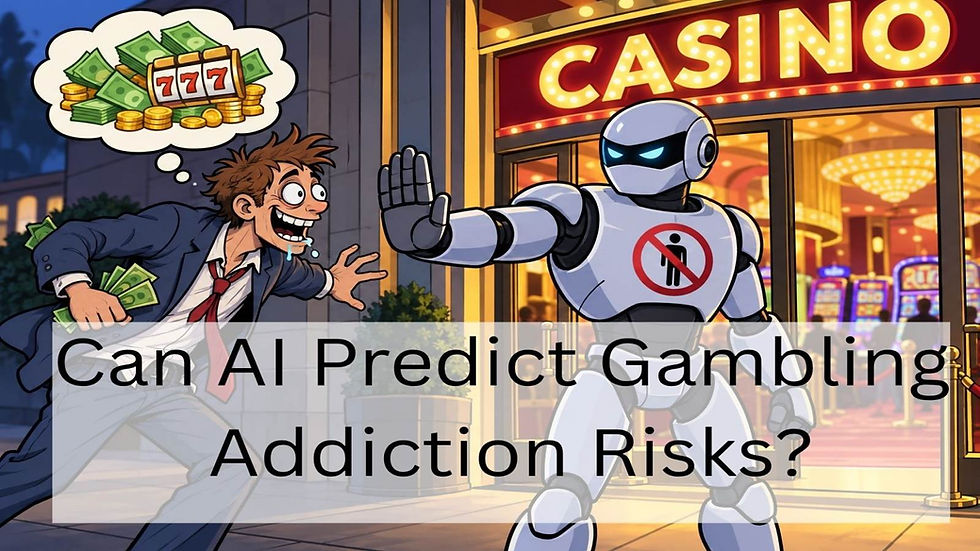
Artificial intelligence is increasingly being explored as a tool for identifying gambling addiction risks. By analysing betting activity, deposits, session length and changes in player behaviour, AI can detect patterns that may indicate someone is developing unhealthy gambling habits.
However, AI cannot predict gambling addiction with certainty or replace a professional diagnosis. Its main value lies in recognising warning signs early enough for preventive action.
For players using a Winbox Download or accessing games through Login H5 page, understanding how behavioural monitoring works can provide useful insight into responsible gambling technology and its limitations.
How Can AI Identify Gambling Addiction Risks?
AI uses machine learning to analyse large amounts of gambling activity and identify patterns associated with potential harm.
Instead of examining individual bets, it looks at how behaviour changes over time.
Common indicators include:
Increasing Deposit Frequency.
Larger Average Stakes.
Longer Playing Sessions.
Repeated Deposits After Losses.
More Frequent Gambling Activity.
Attempts To Increase Account Limits.
Sudden Changes In Spending.
For example, someone who previously gambled twice a month but suddenly begins playing daily and making repeated deposits may trigger a risk alert.
This does not prove addiction. It simply suggests that the behaviour deserves closer attention.
What Gambling Behaviours Can AI Monitor?
AI systems may analyse several types of account data.
Behaviour | What AI May Detect | Potential Concern |
Deposits | Increasing frequency or amounts | Escalating spending |
Bet Size | Sudden increases in stakes | Greater financial exposure |
Session Length | Longer playing periods | Difficulty stopping |
Loss Patterns | Repeated deposits after losses | Possible loss chasing |
Account Limits | Frequent requests to raise limits | Reduced spending control |
Playing Frequency | Shift from occasional to daily use | Increasing involvement |
Account Activity | Unusual changes from previous habits | Potential behavioural risk |
These indicators become more meaningful when several appear together.
Why Is Early Detection Important?
Problem gambling does not always develop suddenly.
Behaviour may change gradually, making warning signs difficult to recognise.
For example, a player might move from:
RM50 Weekly Deposits To RM200.
Two Sessions Per Week To Daily Play.
RM5 Stakes To RM50 Stakes.
One Deposit Per Session To Several.
AI can compare current activity with previous behaviour and identify unusual increases.
This could allow responsible-gambling teams to intervene before the situation becomes more serious.
However, early detection only helps if the platform responds appropriately.
How Accurate Is AI at Predicting Gambling Problems?
AI can identify statistical relationships between gambling behaviour and risk, but its predictions are imperfect.
Accuracy depends on factors such as:
Quality Of Training Data.
Number Of Behavioural Indicators.
Player Population.
Model Design.
Definition Of Problem Gambling.
Availability Of Self-Reported Information.
A system trained on sports betting customers may not perform equally well when applied to slot players.
AI can also produce false positives, flagging someone who is not experiencing harm, and false negatives, missing someone who needs support.
For this reason, AI risk scores should guide further assessment rather than automatically determine whether someone has a gambling disorder.
Can AI Detect Risk Before Players Notice It?
Potentially, yes.
Players may not immediately recognise changes in their own behaviour, particularly when those changes happen gradually.
A machine-learning system can compare recent activity with an individual's historical patterns.
For example, someone who usually plays for 20 minutes but suddenly begins spending several hours gambling may trigger an alert.
Other warning signs might include:
Gambling Late Into The Night.
Increasing Deposit Amounts.
Shorter Breaks Between Sessions.
Repeated Attempts To Recover Losses.
However, behavioural data alone cannot explain why these changes are happening.
A player may be experiencing stress, financial difficulties or other circumstances that an algorithm cannot observe.
What Happens When AI Flags a Player?
Responsible-gambling systems may respond differently depending on the level of concern.
Possible interventions include:
Spending Reminders.
Session-Time Notifications.
Deposit Limit Suggestions.
Cooling-Off Information.
Responsible-Gambling Questionnaires.
Reduced Promotional Messages.
Human Review.
For example, a platform might display a reminder showing how much someone has deposited during the week.
Higher-risk cases may require direct contact from a responsible-gambling team.
The goal should be to support informed decisions rather than simply label players as problematic.
Can AI Help Prevent Loss Chasing?
Loss chasing happens when someone continues gambling or increases spending in an attempt to recover previous losses.
It is one of the behaviours associated with gambling-related harm.
AI may identify patterns such as:
Increasing Stakes After Losses.
Multiple Deposits Within Minutes.
Longer Sessions Following Heavy Losses.
Repeated Attempts To Recover A Previous Balance.
A responsible system could respond by suggesting a break, highlighting spending limits or escalating the account for review.
However, AI cannot physically prevent every instance of loss chasing.
Its effectiveness depends on the safeguards implemented by the operator.
Can AI Reduce Harmful Casino Promotions?
Yes, and this may be one of its most valuable applications.
Suppose a system identifies that a player has significantly increased deposits after repeated losses.
Continuing to send aggressive deposit bonuses could encourage further spending.
A responsible approach would involve:
Reducing Bonus Notifications.
Pausing Promotional Messages.
Highlighting Spending Limits.
Providing Cooling-Off Options.
Offering Access To Support.
This also raises an important ethical question.
The same behavioural data used to identify vulnerable players could potentially be used to personalise promotions.
Casinos should avoid using risk information to encourage additional gambling among people showing signs of harm.
Can AI Diagnose Gambling Addiction?
No.
Gambling disorder is a recognised mental health condition that requires proper clinical assessment.
A diagnosis considers more than deposits or betting frequency.
Relevant factors may include:
Difficulty Controlling Gambling.
Repeated Failed Attempts To Stop.
Gambling Despite Financial Problems.
Concealing Gambling Activity.
Relationship Difficulties.
Emotional Distress.
Chasing Losses.
AI may detect some behavioural indicators, but it cannot fully understand a person's circumstances or determine whether diagnostic criteria are met.
Professional assessment remains important.
What Are the Privacy Risks of AI Monitoring?
AI-based gambling monitoring involves collecting and analysing potentially sensitive behavioural information.
This creates concerns about:
Excessive Data Collection.
Unclear Player Profiling.
Financial Information Security.
Incorrect Risk Classifications.
Third-Party Data Sharing.
Limited Transparency.
Players should understand what information a platform collects and how it is used.
For someone accessing games after a Winbox Login H5 session, it is worth reviewing the platform's privacy policy rather than assuming behavioural monitoring is always used exclusively for safety.
Responsible systems should prioritise data protection, transparency and appropriate oversight.
Does Mobile Gambling Increase Addiction Risks?
Mobile access can make gambling more convenient because games are available throughout the day.
Someone using a Winbox Download may be able to access casino products more frequently than a person who only plays from a desktop computer.
However, mobile gambling alone does not indicate addiction.
Risk depends on a combination of factors, including:
Spending Patterns.
Gambling Frequency.
Session Duration.
Loss-Chasing Behaviour.
Ability To Stop.
Financial Consequences.
AI should evaluate the wider behavioural pattern rather than treating device choice as proof of a problem.
Can Players Recognise Warning Signs Without AI?
Yes.
Many warning signs can be identified through personal awareness and basic account records.
Players should pay attention to:
Spending More Than Planned.
Gambling For Longer Than Intended.
Borrowing Money To Gamble.
Increasing Bets After Losses.
Hiding Gambling Activity.
Feeling Anxious When Unable To Play.
Neglecting Work Or Relationships.
Reviewing deposits, withdrawals and session history can help reveal changes that may otherwise go unnoticed.
If gambling is becoming difficult to control, taking a break and seeking professional support is more important than waiting for an automated warning.
What Is the Future of AI in Responsible Gambling?
Future AI systems may combine several sources of information to produce more personalised risk assessments.
These could include:
Real-Time Betting Activity.
Historical Deposit Patterns.
Session Duration.
Account Limit Changes.
Self-Assessment Responses.
Customer Support Interactions.
More advanced systems may also identify changes in behaviour earlier and recommend interventions based on individual circumstances.
However, improvements in prediction must be matched by strong privacy protections, human oversight and meaningful responsible-gambling policies.
AI should support player protection rather than become another tool for increasing gambling activity.
Conclusion
AI can help predict gambling addiction risks by identifying unusual betting patterns, increasing deposits, longer sessions and other behavioural warning signs.
However, these predictions are not diagnoses. Algorithms can make mistakes, and account activity alone cannot explain a person's financial, emotional or personal circumstances.
Whether using a download or accessing an account through a Winbox Login H5 page, players should monitor their own gambling habits and use available spending limits and cooling-off tools.
AI is most valuable when it supports early intervention, responsible decision-making and professional assistance rather than replacing them.
FAQs
Can AI Detect Gambling Addiction?
AI can identify patterns associated with higher gambling risk, but it cannot independently diagnose gambling disorder.
What Gambling Behaviour Can AI Monitor?
AI may analyse deposits, bet sizes, session duration, gambling frequency, loss chasing and changes in account activity.
How Accurate Are AI Gambling Risk Predictions?
Accuracy varies depending on the model and data. AI can identify useful warning signs but may incorrectly classify some players or miss others.
Can AI Stop Someone From Gambling?
AI may trigger warnings, account limits, cooling-off options or human intervention, but it cannot guarantee that harmful gambling will stop.
Does Mobile Gambling Mean Someone Is More Likely to Become Addicted?
Not necessarily. Mobile access increases convenience, but gambling risk depends on spending, behaviour, control and personal circumstances.
Should Casinos Use AI to Identify At-Risk Players?
AI can support responsible gambling when used transparently, with appropriate privacy protections, human oversight and meaningful interventions.


Comments